Building a successful e-commerce business from scratch is not easy. It requires the right product, consistent quality, strong execution, market understanding, and the ability to adapt quickly.
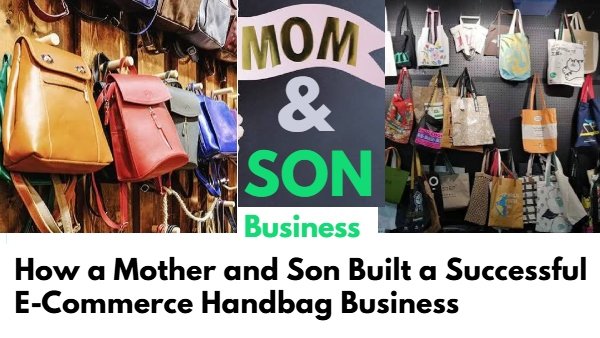
The journey of Shaheen and her son is a powerful example of how a family business can grow from a small beginning into a multi-crore e-commerce operation. Their brand, HaveGlam, specializes in women’s handbags and sells products through major marketplaces including Flipkart, Meesho, and Amazon.
What makes their story particularly interesting is that they are not only selling products online but also designing and manufacturing many of them themselves.
The Beginning of HaveGlam
The journey began during the COVID-19 lockdown.
Before entering e-commerce, Shaheen had worked in teaching for around 10 years. She had experience teaching children and later completed her MA and B.Ed. She also ran coaching classes and had around 100 students at one point.
However, during the lockdown, schools were closed and her husband also faced an accident. Her son was studying in Class 11 at the time.
With everyone staying at home, the family started thinking about doing something different.
Shaheen had noticed that many people in their local area were involved in handbag manufacturing. Some were manufacturers while others worked as skilled workers.
That observation planted the idea of starting a handbag business.
Initially, a family friend helped them enter the business. They began getting handbags manufactured through outside suppliers and started selling them online, particularly on Meesho.
However, quality problems eventually became a major issue. Products were arriving with defects, leather was cracking, and their return rate started increasing.
This made the family realize that outsourcing everything was not the right long-term solution.
They decided to gradually move toward their own manufacturing setup.
From Outsourcing to In-House Manufacturing
The family started learning how handbags were manufactured and began working with local workers.
Because their area already had handbag manufacturers, workers and raw-material suppliers, they had an important advantage.
They could source materials locally and manage production without having to travel long distances.
At one stage, the family also experimented with a clothing business. They started manufacturing Western dresses and frocks.
The clothing business received good orders, including around 200 orders for a single design. However, finding suitable clothing workers became difficult.
Shaheen sometimes had to travel to Seelampur to purchase fabric and even carried bundles of fabric through public transport.
Eventually, the family realized that handbags were a better fit for their existing ecosystem.
They returned their focus to handbags and began studying the market more seriously.
They spent 16–18 hours researching products, designs, trends and customer preferences.
The goal was not simply to copy existing products but to take an existing idea and give it an Indian look through changes in design, buttons, chains, fabrics and other elements.
Also Read: How Nitesh Built a ₹3 Crore Digital Product Business From a Laptop
Introducing the HaveGlam Brand
The family eventually developed their own brand, HaveGlam.
The name was selected around the idea of beauty, fashion and glamour.
The brand focuses mainly on women’s handbags, including affordable everyday bags as well as more premium designs.
One of their important strategies has been to understand India’s price-sensitive consumer market.
A large portion of Indian consumers look for affordable products that provide good value for money.
The family understood that if they could create attractive handbags at affordable prices while maintaining acceptable quality, they could reach a large customer base.
Some of their products are priced extremely low, while others are positioned in the ₹300–₹1,000+ range.
How They Maintain Quality at Low Prices
One of the biggest questions surrounding their business is how they manage to sell handbags at such low prices while maintaining good ratings.
Their answer is manufacturing control.
The family designs many products themselves and gets fabrics manufactured in bulk.
Buying materials in large quantities helps reduce the cost per unit.
They also have their own manufacturing facility in Delhi, which reduces dependence on outside manufacturers and allows them to control production more closely.
Because manufacturing happens within their own ecosystem, they can monitor defects, production quality and customer feedback more efficiently.
Their products have received thousands of ratings, with some products maintaining ratings around four stars.
Daily Orders Can Reach Thousands
The scale of the business has grown significantly.
During the off-season, they receive around 2,000 orders per day.
During the peak season, their daily orders have reached approximately 7,000 orders.
At an average order value of around ₹290–₹300, this represents a significant daily sales volume.
The family also operates multiple accounts across different marketplaces.
Their manufacturing capacity has grown along with the business.
They can manufacture approximately 7,000–8,000 pieces per day, supported by around 100–150 workers.
This allows them to maintain inventory while continuing production in the background.
Understanding Their Margins
The business operates on relatively tight margins because many products are sold at affordable prices.
Their average settlement can be around ₹190 per piece after marketplace calculations.
Return charges also affect profitability.
Their return rate is generally around 7–8%.
After considering returns, GST and other marketplace-related deductions, approximately ₹145–₹150 may remain from a typical settlement.
Their product cost can be around ₹100–₹110.
After accounting for various costs, they may retain around ₹40–₹50 per product.
At thousands of orders per day, even a relatively small margin per product can become significant.
Why They Reduced Their Product Prices
One of their interesting strategies is reducing prices to increase product visibility.
A product that originally sold for around ₹39 was gradually priced lower.
According to the family, maintaining competitive pricing can help a product gain visibility on e-commerce platforms.
One of their hero products reportedly receives around one crore views per day on Flipkart.
At one point, the product was selling around 800 pieces per day across their accounts and had reached more than 2,000 orders per day during its strongest period.
The strategy was not simply about making a high margin on each unit.
Instead, they focused on visibility, ratings, volume and long-term customer acquisition.
Also Read: How a 21-Year-Old Built a Digital Marketing Agency and Earns ₹7–8 Lakh Per Month
Their Hero Product and Manufacturing Capacity
The family says that their hero product became successful because it combined affordability with a unique design.
The cylindrical shape created additional space inside the handbag while giving it a different appearance.
The design was inspired by an existing photograph but modified according to their own ideas.
They added elements such as chains and customized buttons to create a product that felt more suitable for the Indian market.
Because the product became successful, competitors quickly began copying it.
The family estimates that hundreds of sellers eventually started selling similar versions.
However, their philosophy is that simply copying another seller’s product is not enough to build a long-term business.
They believe sellers must develop their own understanding of customers and continuously create new ideas.
Using Social Media and AI for Product Research
Product research is an important part of the HaveGlam strategy.
Shaheen and her family regularly search social media and other platforms for new designs and trends.
They may discover products from countries such as Saudi Arabia or Korea and then adapt the concepts for Indian consumers.
They also use AI tools for product presentation.
For example, they can photograph an actual product and then use AI to create different presentation images or color variations.
This allows them to experiment with product visuals without having to conduct a completely new photoshoot for every variation.
Competitors Can Copy Products, But Execution Matters
One major challenge in e-commerce is product copying.
Once a product becomes successful, competitors can easily see it online and create similar versions.
HaveGlam has experienced this directly.
However, the family believes that copying alone cannot create sustainable success.
A competitor may copy a product, but they still have to manage manufacturing, quality, pricing, inventory, customer service, returns and marketplace operations.
Their advantage comes from controlling many parts of the business themselves.
The Three-Person Division of Work
One of the biggest reasons behind the family’s success is their division of responsibilities.
Shaheen focuses heavily on product research and design.
Her husband is involved in manufacturing.
Her 21-year-old son handles technical, account-management and data-related work while continuing his studies.
This division allows each person to concentrate on a particular area.
Shaheen can search for products and identify trends.
Her husband can focus on production.
Her son can handle technical operations, marketplace data and business growth.
The family believes this division of work helps them make decisions faster.
Taking Risks With New Products
Shaheen is also comfortable taking calculated risks.
Sometimes the family launches a product before manufacturing a large quantity.
They first test whether customers are interested.
If orders begin coming in, they quickly manufacture the product and fulfill the demand.
This approach allows them to test products without committing too much inventory upfront.
However, it also requires a strong manufacturing team.
The family says their workers play a major role in this process.
In some situations, workers have even worked late at night to complete urgent orders for Amazon and other marketplaces.
Also Read: From YouTube Content to ₹1 Crore in 3 Months: How Vardan & Suhani Built a Hair Oil Brand
Reaching ₹1 Crore in Business
One of the biggest turning points came through their Meesho account manager.
The family had a good relationship with their account manager, who regularly advised them about advertisements, pricing and product ranges.
After working with them for one or two months, the account manager told Shaheen that they had completed ₹1 crore in business.
Shaheen was surprised because she was not personally managing the financial side of the account.
Her son handled the account and technical operations.
When they checked their older account, they discovered that they had already completed another ₹1 crore in business there.
This became a major motivation for the family.
₹10 Crore Sales in 2025
The business continued growing rapidly.
According to the figures shared by the family, their main HaveGlam account generated approximately ₹10 crore in sales during 2025.
Around 3 lakh customers purchased products through the account.
The family also operates additional accounts.
For example, in January 2025, gross sales were approximately ₹1 crore.
After returns and cancellations, net sales were around ₹76 lakh.
In December, gross sales were approximately ₹60 lakh, while net sales were around ₹47 lakh.
In November, net sales were around ₹43 lakh.
In October, net sales reached approximately ₹51 lakh.
Overall, the account generated roughly ₹50 lakh in monthly net sales during several periods.
After expenses, salaries and other costs, the family said that around 10% profit could comfortably remain.
Understanding Gross Sales and Net Sales
The difference between gross and net sales is important in e-commerce.
Gross sales can include orders that are later cancelled, returned or not successfully delivered.
Net sales provide a more realistic picture of the revenue remaining after those deductions.
For this reason, the family focuses on net sales when evaluating actual business performance.
Their return rate is generally around 7%.
Managing returns effectively is essential because return charges can significantly reduce profit margins.
Recovering Extra Money Through Data Analysis
The son has another major advantage—his knowledge of data.
He is studying data science and understands how to analyze large amounts of marketplace information.
One major issue they faced was volumetric shipping charges.
A small difference in package dimensions could sometimes increase shipping charges significantly.
For example, a package that should have attracted a ₹70 delivery charge could sometimes be charged around ₹120 because of its dimensions.
By downloading marketplace data and analyzing rate cards, he discovered cases where the business had been charged more than expected.
He says he was able to recover approximately ₹3–₹3.5 lakh per month through detailed data analysis.
This became additional profit for the business.
It also shows why understanding Excel, data and marketplace reports can be extremely valuable for e-commerce sellers.
Flipkart Commission and No-Return Products
Another area they pay attention to is marketplace commission.
According to their experience, certain products below a particular price level can qualify for favorable commission structures.
They also discussed no-return or assured product programs.
Under such programs, customers may have restrictions on returning certain products while still receiving additional confidence through the marketplace’s assurance system.
Replacement policies can work differently, and reverse-shipping costs may be reduced in certain situations.
Understanding these marketplace programs can have a direct impact on seller profitability.
Starting With a Salary of ₹300
Shaheen’s entrepreneurial journey did not begin with a large amount of money.
Her first earning was just ₹300.
After completing Class 10, she started teaching children while continuing her education.
She later moved to Delhi and continued studying.
After marriage, her husband supported her education.
She completed her MA through distance education and later completed B.Ed.
She also qualified for TET and had the opportunity to work as a teacher in Bihar.
However, because her family was settled in Delhi, taking the job was not practical.
Also Read: From Bank Job to ₹33 Lakh Sales: How Shivam Built His Meesho Business
From a ₹4,000 Job to a Growing Business
After moving to Delhi, Shaheen also started teaching and eventually received a job paying around ₹4,000.
Instead of being discouraged by the low salary, she treated the opportunity seriously.
She also started coaching students.
Her coaching classes eventually grew to around 100 students.
She mainly taught science and also had knowledge of arts subjects because of her MA in history.
Her son also helped her from an early age.
When he was in Class 8, he sometimes taught mathematics to students in her tuition classes.
This early experience of working together eventually became useful when the family entered e-commerce.
How the Family Uses Its Earnings
For Shaheen, money is not the only motivation.
The family also uses its earnings to support people around them.
They have helped workers and people who were struggling financially.
They have also helped some individuals start their own online businesses.
In some cases, they provided guidance on everything from setting up the business to managing returns, accounts and filings.
One woman they helped eventually started earning lakhs of rupees.
Shaheen says that helping other people become financially independent gives her significant satisfaction.
Family Support and Future Plans
The business is strongly supported by the entire family.
Her husband has played an important role in supporting her decisions.
Her children are also involved in the business.
Shaheen’s long-term goal is not only to build a successful business but also to contribute to education.
She wants to use her experience and resources to help people in her local community.
She has also helped her brother develop his own e-commerce business and establish his own home.
In the future, the family hopes to do more work related to education and social service.
Selling on Meesho, Flipkart and Amazon
HaveGlam currently sells through multiple marketplaces, including:
- Meesho
- Flipkart
- Amazon
However, the strategy is not exactly the same on every platform.
The family studies the behavior of each marketplace and changes its pricing and product strategy accordingly.
For example, they may initially establish a price benchmark on Flipkart and then gradually reduce the price.
This can help them understand customer response while building product visibility.
The Importance of Pricing Strategy
Instead of immediately offering the lowest possible price, the family sometimes starts with a higher price and gradually reduces it.
For example, a product might initially be listed at ₹49 and later reduced.
The objective is to create a benchmark and generate customer activity before aggressively reducing the price.
The family believes that sellers have two major options for increasing visibility:
- Reduce the price through discounts.
- Spend money on advertising.
Their preference has often been to establish organic visibility first and then use advertising when appropriate.
Launching New Products
HaveGlam continues to experiment with new products.
The family has launched bags in different shapes, sizes and materials.
Some products are extremely affordable, while premium handbags can cost ₹999 or more.
They have also introduced special packaging and products aimed at occasions such as Valentine’s Day.
Their branding is included directly on the products, helping them gradually establish HaveGlam as a recognizable brand.
Some premium products include handwork, weaving and other decorative elements.
They are also exploring Amazon and their own website as additional sales channels.
Building Their Own Website
Apart from marketplaces, the family is developing its own website.
The goal is to eventually have a direct online presence rather than relying entirely on third-party marketplaces.
Having their own website can provide greater control over branding, customer relationships and product presentation.
The Importance of Product Uniqueness
According to the family, uniqueness is one of the most important factors for a new e-commerce seller.
Instead of selling exactly the same products that thousands of sellers already offer, sellers should try to introduce something different.
The cylindrical handbag became successful partly because its shape was unusual.
Later, the family experimented with square, curved and heart-shaped designs.
Even relatively small changes can make a product appear different and attract customer attention.
Product Quality Is More Important Than Price Alone
Price is important in e-commerce, but the family believes sellers should not focus only on price.
Product quality matters just as much.
Customers should feel that the product they receive is worth the money they paid.
For example, a ₹1,000 handbag should feel like a ₹1,000 product.
Material, softness, stitching, design and usability all contribute to the customer’s perception of value.
This is particularly important when building ratings and repeat customers.
The Advantage of Manufacturing Your Own Products
One of HaveGlam’s biggest advantages is its manufacturing capability.
Instead of depending entirely on third-party manufacturers, the family controls much of the production process.
This gives them greater control over:
- Product quality
- Production speed
- Design changes
- Inventory
- Cost
- Defect management
If a particular product suddenly receives more returns, they can investigate the manufacturing unit responsible for that batch.
This makes it easier to identify and correct quality problems.
Why They Do Not Fear Competitors
The family does not consider any single seller to be its direct competitor.
Their philosophy is to keep developing new products rather than focusing too much on what competitors are doing.
If a competitor copies one product, they can move on to the next design.
This approach is particularly useful in fashion, where customer preferences change quickly.
Big Billion Days and the ₹91 Lakh Month
One of their strongest sales periods came around the Big Billion Days season.
The family reported approximately ₹91 lakh in net sales and around ₹1.2 crore in gross sales during one major period.
The son had planned the strategy months in advance.
One heart-shaped product had only a few hundred ratings initially.
After aggressive visibility and sales activity, it received around 1,200 orders and eventually crossed around 1,000 ratings.
At one point, the family received approximately 7,000 orders in a single night.
During the Big Billion Days period, one account reportedly generated around ₹30 lakh in sales in a single day.
Eventually, some products had to be marked out of stock because the order volume was higher than their immediate fulfillment capacity.
Planning Sales Months in Advance
Their Big Billion Days success was not accidental.
The family says they planned the strategy around three months in advance.
They regularly communicated with marketplace managers and category teams.
They discussed pricing, inventory, products and sales targets.
Rather than immediately relying on advertisements, they initially focused on organic traffic and product performance.
Once products gained visibility and ratings, they could be pushed further.
This combination of planning, data analysis, product selection and manufacturing capacity helped them handle a major sales surge.
Also Read: From YouTube Content to ₹1 Crore in 3 Months: How Vardan & Suhani Built a Hair Oil Brand
What New E-Commerce Sellers Should Know in 2026
For anyone planning to start an e-commerce business in 2026, the family recommends starting with the fundamentals.
The first question should be:
What are you selling?
The second question should be:
Where will you manufacture it?
A seller should ideally choose a product that is easy and affordable to manufacture in their local area.
Affordable labor, affordable space and easily available raw materials can significantly reduce costs.
Transportation expenses can also be minimized.
For example, the family has an advantage because handbag workers and raw-material suppliers are already available around them.
Someone trying to manufacture the same products in a location where materials and workers are expensive may struggle to compete.
Choose a Business Based on Your Existing Knowledge
Another important lesson is to choose a business in an area you understand.
Knowledge grows as you work, but having some initial understanding can make the process much easier.
New sellers should research:
- Product demand
- Manufacturing costs
- Raw materials
- Competition
- Marketplace fees
- Return rates
- Customer preferences
- Profit margins
- Packaging
- Shipping costs
Understanding these areas before investing heavily can prevent expensive mistakes.
Start Small and Learn
New sellers do not necessarily need to invest huge amounts of money immediately.
The family initially invested approximately ₹8 lakh.
The money was used for items such as a laptop, printer, fabrics and initial product development.
At that time, they had limited knowledge and also experimented with some copied designs.
Over time, they learned through actual marketplace experience.
The important lesson is that knowledge grows through execution.
Why Product Research Is So Important
The family spends significant time researching products.
They search social media and international markets for new ideas.
They look for products that can be modified for Indian consumers.
This research can help identify trends before they become mainstream.
However, simply copying a product is not enough.
The goal is to understand why customers like the product and then create something that provides similar value with a unique identity.
Teaching Others and Sharing Knowledge
The family also receives requests from people who want guidance about e-commerce.
They do not always charge for consultation.
Shaheen has always believed in teaching others.
Even when her son was in Class 11, she brought people into the business to teach him different aspects of e-commerce.
Her objective was to ensure that he could eventually manage the business independently.
The people who learned from them eventually moved on to their own work.
This allowed Shaheen to reduce her daily workload and focus more on business development.
The Bigger Lesson Behind Their Success
The HaveGlam story is not simply about handbags.
It is about identifying an opportunity, learning continuously and building around the resources already available.
The family had several advantages:
- Local manufacturing access
- Skilled workers
- Product research
- Strong family coordination
- Marketplace knowledge
- Data analysis
- Affordable pricing
- Continuous product development
- Customer-focused quality
- Willingness to take calculated risks
Most importantly, they divided responsibilities according to their strengths.
Shaheen focuses on products and design.
Her husband focuses on manufacturing.
Her son focuses on technology, data and business operations.
This combination has helped them scale the business significantly.
From ₹300 to a Multi-Crore E-Commerce Business
Shaheen’s journey began with her first earning of just ₹300.
She later became a teacher, ran coaching classes, supported her family and eventually entered e-commerce.
Her family initially invested around ₹8 lakh.
Today, their business operates across multiple marketplaces, generates thousands of orders, employs around 100–150 workers and has reportedly generated around ₹10 crore in sales through one major account during 2025.
The journey shows that a successful e-commerce business does not necessarily start with a massive company, expensive office or huge team.
It can begin with a family, a product idea and the willingness to learn.
Final Takeaway
The biggest lesson from the HaveGlam journey is that e-commerce is not only about finding a product and listing it online.
Success requires understanding customers, controlling costs, maintaining quality, analyzing data, managing returns, studying marketplace algorithms, building inventory and continuously developing new products.
The story of Shaheen and her son also demonstrates the importance of family support and division of responsibilities.
From teaching and earning ₹300 to building a multi-crore handbag business, their journey is an example of how consistent effort, product knowledge, manufacturing control and long-term thinking can create significant results.
For anyone planning to start an e-commerce business in 2026, their advice is simple: start with a product you understand, use the resources available around you, focus on quality, learn from data, keep improving your products and do not depend entirely on copying what others are already doing.
In the fast-changing world of fashion and e-commerce, the businesses that continue learning and adapting are the ones most likely to survive and grow.