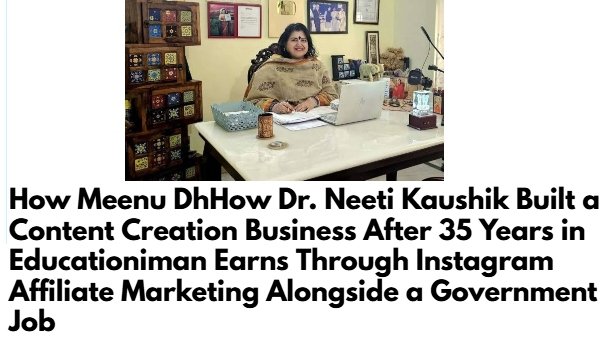
Can someone start content creation after spending 35 years in education? The conversation with Dr. Neeti Kaushik shares an inspiring example of how a long career, a love of teaching and a willingness to learn can lead to a new chapter online. After working as a teacher and school leader, she started publishing content on YouTube and gradually expanded into blogging, workshops, online courses and an e-commerce store.
Her journey was not built around expensive equipment or a perfectly planned studio. In the beginning, she recorded videos with a phone, wrote ideas in a diary and learned technical skills step by step. Her experience offers useful lessons for people who want to begin creating content while working, after retirement or from home.
How Dr. Neeti Kaushik Started Her YouTube Journey
In the interview, Dr. Neeti explains that she began exploring online work around the period after COVID. She had written more than 60 school books and enjoyed writing, so blogging first caught her attention. While learning about blogging, she came across videos explaining how creators could earn through YouTube. That encouraged her to try content creation as another possible source of income.
She started uploading videos in January 2021. Her early content was aimed at children, teachers and parents who were dealing with the challenges of the pandemic. She wanted to motivate people, listen to their concerns and help them move through a difficult period.
She also kept a diary of notes while learning from online tutorials. Those notes helped her turn what she was learning into practical steps instead of waiting until she knew everything.
She Started With a Phone, Not Expensive Equipment
One of the clearest lessons from the interview is that a beginner does not necessarily need a professional camera or a sophisticated recording setup. Dr. Neeti said that she still records with a Samsung phone. In the early days, she used whatever was available: sometimes holding the phone, sometimes placing it on a table or balancing it against books.
She later bought an inexpensive wired microphone and experimented with different backgrounds. She often recorded at night, after the household had become quiet. Rather than waiting for the ideal setup, she concentrated on explaining her ideas clearly.
Her approach is a reminder that useful information, clear communication and consistency can matter more at the beginning than having the newest phone or expensive equipment.
How Long Did YouTube Monetization Take?
According to the interview, Dr. Neeti set herself a target of reaching 1,000 subscribers and 4,000 watch hours. She wrote those numbers down and treated them as a goal. She said it took roughly nine to ten months for her channel to become monetized.
She also described the practical challenges of starting out. Editing was not a skill she already had, so a few former students helped edit videos for a small fee. She would record several videos at once and publish them as they were ready. Her early process was simple and developed gradually.
For current eligibility rules, creators should check the official YouTube Partner Program overview, because requirements and available monetization features can change. Meeting a threshold does not guarantee acceptance; YouTube reviews channels against its policies.
Also Read: How Arunabh Sinha Built a 900+ Store Laundry Business From an Underrated Idea
Why She Chose Topics She Cared About
Dr. Neeti said that she did not build her channel by chasing every trend. She created content around subjects she wanted to understand and explain, including motivation, psychology, astrology-related myths, planets and personal development. She also paid attention to questions people asked in comments and in her community.
Her method for finding topics was practical: write down the questions people ask, consider whether others may have the same problem, and prepare points that answer those questions. She explained that a question under a YouTube video can become the subject of a blog post as well.
This approach can help creators develop a repeatable content process. Instead of constantly asking what to publish next, they can listen to their audience and create helpful answers to real questions.
From YouTube Videos to Blogging and Websites
Blogging remained part of Dr. Neeti’s plan because she enjoyed writing. In the interview, she described building her first website with help from a young developer. She then began publishing articles connected to the subjects she discussed in her videos.
She used audience questions as ideas for blog posts. When people asked similar questions repeatedly, she collected them and wrote articles that addressed those questions. This allowed her to connect video content with written content and give people another way to find answers.
Her experience illustrates how one topic can be adapted for more than one platform. A video can introduce an idea, a blog post can explain it in more detail, and a community post can invite people to share follow-up questions.
Also Read: How Esha Built Repeat Good From a College Idea to a ₹25 Crore Food Brand
How She Expanded Into Workshops and Online Courses
Dr. Neeti also used her teaching experience to develop workshops and classes. She explained that she considered workshops a possible way to cover expenses while she built her online work. Later, she created courses and other learning opportunities around subjects she had experience with.
Her story shows that content creation does not have to rely only on advertising revenue. Depending on a creator’s knowledge and audience, other possible formats include workshops, classes, memberships, consultations or digital learning products. These options require planning, useful content and an understanding of what the audience actually needs; they do not guarantee a particular income.
Building an E-Commerce Store Alongside Content
The interview describes a second website focused on products related to crystals. Dr. Neeti said that the store was connected to Shopify and that she learned technical skills by watching educational videos and discussing improvements with the person helping with the website.
She explained that the content she published on YouTube and her websites helped her communicate with her audience about products and activities. The interview also describes two separate business operations: one associated with courses, workshops and consultations, and another associated with the product store.
Creators considering e-commerce should understand that a store involves more than uploading products. It can require product information, customer support, order processing, website maintenance and a team. Results vary, and traffic alone does not guarantee sales.
Also Read: How a 21-Year-Old Built a Digital Marketing Agency and Earns ₹7–8 Lakh Per Month
What Income Did She Mention in the Interview?
The conversation includes several income-related figures, but they refer to different activities and should not be treated as one consistent monthly salary. Dr. Neeti mentioned that YouTube advertising income can fluctuate, and that one strong month may not represent what a creator earns every month. She also discussed a particularly strong month for memberships and separately described orders from her e-commerce store.
Because these figures are statements made during the interview and have not been independently verified here, they should be understood as reported examples rather than typical outcomes. Income from content can vary with audience size, topic, viewing patterns, platform policies, product offers and many other factors.
Her Advice for People Who Want to Start Creating Content
Dr. Neeti’s advice was to begin with a small, manageable amount of time instead of waiting for the perfect moment. She suggested setting aside around half an hour each day for something a person enjoys or knows well, then continuing consistently.
She pointed out that people have different strengths. Someone may enjoy teaching, writing, cooking, knitting, making things or explaining a subject. Not everyone needs to appear on camera. A person who prefers writing may start with posts or a blog, while someone who enjoys speaking may try short videos or live sessions.
- Start with what you know: Choose a subject you enjoy or have experience with.
- Use the equipment you already have: Begin simply and improve your setup when it becomes necessary.
- Learn as you go: Editing, publishing and website skills can be developed over time.
- Listen to your audience: Comments and questions can help you find useful topics.
- Repurpose thoughtfully: A subject can become a video, a blog post or a community discussion.
- Keep taking action: Goals and vision boards are not substitutes for consistent work.
- Be realistic: Audience growth and earnings are not guaranteed, so avoid relying on unproven income promises.
Why Her Education Experience Helped
Her years in education gave her practice explaining ideas, understanding learners and communicating with different groups. In the interview, she also spoke about the importance of life skills, emotional support and giving students opportunities to explore their strengths beyond exam scores.
These ideas connect with content creation: a creator needs to understand what an audience is struggling with and explain a topic in a way people can use. Teaching experience can be useful, but people from other backgrounds may also have valuable skills and knowledge to share.
Also Read: How Dayashankar Built a Solar Business From Blogging and YouTube
Content Creation Is More Than Uploading Videos
Dr. Neeti’s journey developed from posting videos into a broader online presence that included blogging, workshops, courses, social media and an e-commerce store. The central lesson is not that every creator should build all of these at once. It is that content can help people discover your work, while other platforms or services may give them different ways to learn from you or engage with your business.
Starting small, learning the process and serving an audience consistently can be a sensible first step. However, every platform has its own rules, and growth takes time. There is no guaranteed number of views, subscribers or earnings for a new creator.
Final Thoughts
Dr. Neeti Kaushik’s story is an example of starting a new professional chapter after a long career in education. She began with a phone, handwritten notes and a willingness to learn. Over time, she added blogging, workshops, courses and an online store to her work.
For anyone thinking about content creation, the practical takeaway is simple: begin with a subject you care about, make something useful, learn from feedback and keep improving. You do not need to have every technical skill on day one—but you do need patience, consistency and realistic expectations.